CAD Variant Architecture

Understand the Decisions Behind Product Variants

Explore how dimensional changes, feature states, and shared components shape related product configurations. ConfigBranch Atlas publishes independent engineering cases, comparison matrices, and practical review notes for product-family design.

Zero Model Bloat
Independent CAD Guidance
Mechanical Traceability
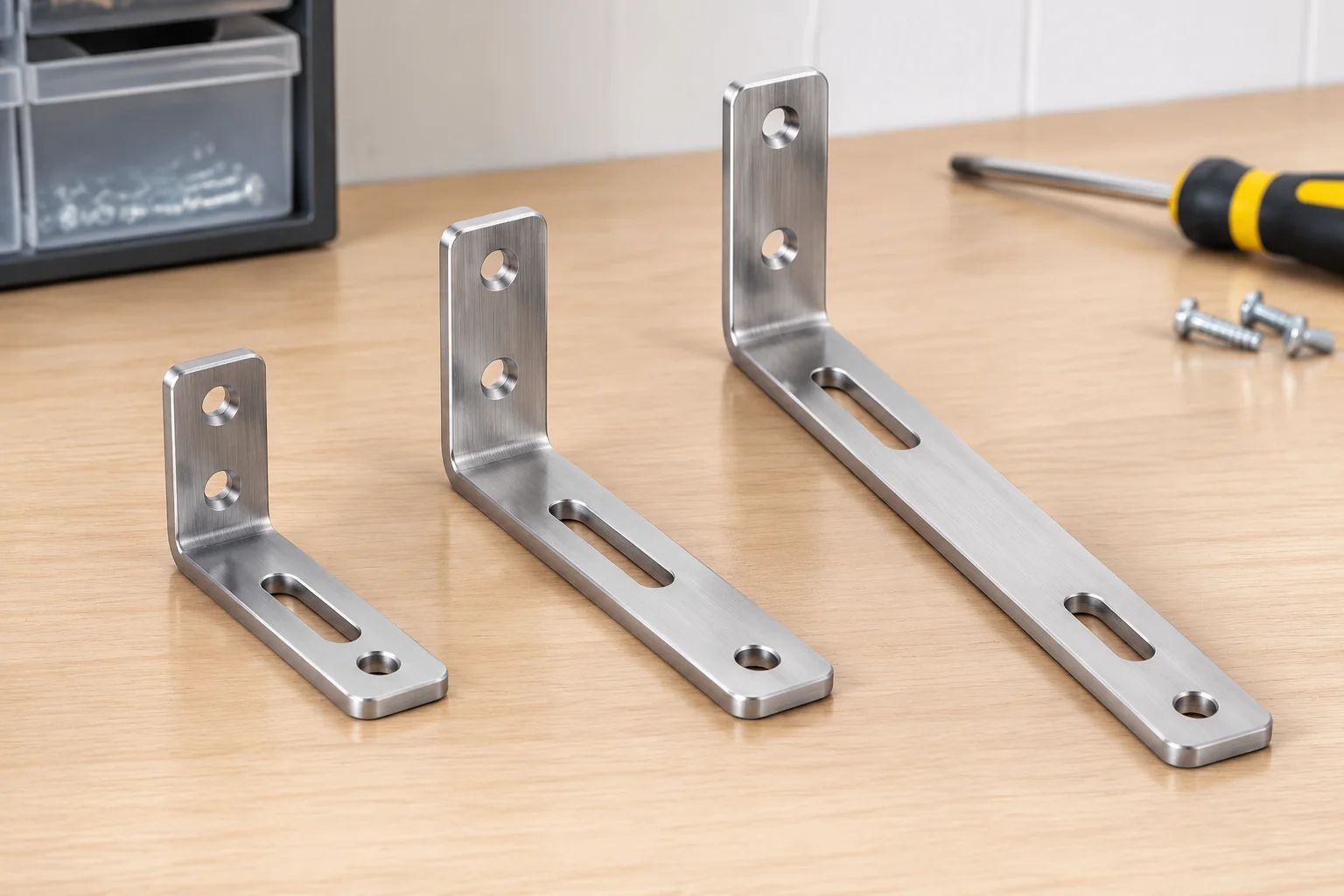
CAD Engineering Workspace with Product Variants
Configuration Intent L: 60 → 120 mm
Family Rule Validation Mounting Pattern A (Shared)
Post-Engagement Assistance

Engineering Support & Response Schedules

Following any architectural review or CAD configuration audit, our engineering desk remains accessible to your mechanical teams. Explore our direct contact channels, working windows, and committed review turnaround intervals.

Technical Consultation Desk: Active & Monitoring
Mon – Fri: 08:00 – 18:00 ESTDirect CAD Hotline

Target Response Intervals

Standard turnaround thresholds by submission classification to keep engineering release schedules on track.

  • Critical Pre-Release Hold< 2 Hours
  • Design Table Validation< 6 Hours
  • General Model Consultation< 24 Hours

Immediate Phone Escalation

Speak directly with a mechanical review lead for immediate verification of configuration states, suppressions, or assembly mates.

Direct Engineering Line2564286218Operating Monday – Friday, 08:00 – 18:00 EST

Document & Model Inquiries

Submit your STEP files, design tables, drawing packages, and change orders directly for asynchronous evaluation.

Technical Dispatch Emailinfo@configbranchatlas.com
Engineering Office8400 S Bryant Ave, Oklahoma City, OK 73149, United States
Accepted Archive FormatsSLDPRT, SLDASM, STEP, IGES, Native Tables
Complimentary Engineering Resource

Free Configuration Audit Checklist

A rigorous, 28-point pre-release verification framework designed for mechanical engineers, CAD designers, and review teams. Validate variant logic, suppress ghost references, and protect shared parametric intent prior to drawing release.

Engineering Release Protocol PDF & Tabular Sheet

What You Receive in the Audit Package

Developed from real-world manufacturing reviews to prevent costly rework caused by silent dimension overrides and unintended feature suppressions across product families.

Section 1: Configuration Intent & Boundary Rules

A deterministic 5-point decision tree to establish when a variant warrants a dedicated CAD configuration versus an independent part number or flexible subassembly.

Section 2: Shared Dimension Integrity Matrix

Step-by-step verification rules to isolate mounting hole centers, baseline clearances, and global driven dimensions that must never drift across variants.

Section 3: Feature Suppression Tree Audit

Sanity verification protocols to catch circular parent-child dependencies and dangling mates before drawing views are committed to production.

Section 4: Cross-Family Drawing Callout Guide

Clear guidelines for tabular dimensioning, bill-of-materials configuration flags, and unambiguous change notes for tooling and shop-floor personnel.

Direct Engineering Access

Request Your Copy

We keep our distribution direct and peer-to-peer. No forms to fill out and no marketing trackers. Simply click the button below to generate a pre-addressed email request directly to our editorial desk.

Format:Interactive PDF + Audit Sheet
CAD Compatibility:Agnostic (SOLIDWORKS, Inventor, NX)
Delivery:Direct reply to your corporate email
License:Free for internal engineering use
A configuration is a design decision, not just another model state.
Request Checklist via Email Sent straight from editorial engineers to your inbox.
CAD Architecture Consultation

Schedule a Technical Review Call

Select an engineering focus, consultation length, and preferred time window to align your multi-variant CAD architecture directly with our team.

1 Choose Review Topic

Engineering Logic
Feature Suppression Strategy

Evaluate when features should be suppressed versus controlled by dedicated design tables.

Parametric Table Integrity

Audit equations, design variables, and global parameters across variant families.

Pre-Release Family Verification

Check drawing associativity, dimension preservation, and configuration validation checks.

Naming & Part Numbering

Structure self-describing configurations that remain transparent to production teams.

2 Select Session Length

CAD Diagnostic

3 Preferred Time Slot (UTC)

Online Video Call

Session Overview

Direct coordination via WhatsApp ensures rapid alignment without administrative overhead.

TopicFeature Suppression Strategy
Duration30 Minutes
Time WindowToday 10:00 AM UTC
PlatformGoogle Meet / Screen Share

Prepare your CAD feature tree or assembly questions for live screen discussion.

Book via WhatsApp
Systematic Review Process

From Variant Intake to Verified Mechanical Release

Engineering configurations require rigorous structural validation rather than ad-hoc model toggling. Here is how our mechanical peer audit process evaluates, isolates, and verifies variant families from raw CAD assemblies to reliable production releases.

01
Stage 1 • Intake

Intent & Boundary Definition

Every variant begins with explicit engineering intent. We catalog the functional rationale behind the deviation, establishing immutable parent parameters and isolating allowable branch dimensions.

  • Identification of core driving dimensions
  • Exclusion of duplicate component states
02
Stage 2 • Architecture

Parametric & Feature Mapping

We map active versus suppressed operations across the feature tree. Child features dependent on suppressed parents are isolated to prevent silent geometric rollbacks and rebuild failures.

  • Rigid parent-child dependency checks
  • Deterministic mate references
03
Stage 3 • Matrix

Design Table Logic Verification

Tables should read as formal engineering contracts. We analyze custom properties, part numbers, configuration-specific materials, and equation evaluations for syntactical and numeric integrity.

  • Alphanumeric part naming consistency
  • Mass properties & bounding box limits
04
Stage 4 • Cross-Check

Multi-Version Interference Check

Dynamic clearance checks and interference matrices are executed simultaneously across every version tier to ensure assembly variations do not cause mating clashes down the line.

  • Cross-variant envelope confrontation
  • Hardware stack and clearance clearance
05
Stage 5 • Audit

Pre-Release Question Matrix

Structured peer interrogation verifies if tooling implications, raw material stock standards, and fastener unifications remain respected before models transition to manufacturing documentation.

  • Standard tooling availability check
  • Suppliers and purchase component alignment
06
Stage 6 • Deliverable

Formal Decision Documentation

The evaluation culminates in an archival audit dossier detailing decision trees, boundary constraints, and validated bill-of-materials structures for engineering and fabrication teams.

  • Clean PDF revision audit brief
  • Standardized downstream CAD configuration tree

Ready to Audit Your CAD Variant Architecture?

Explore our practical guidelines or consult directly with our mechanical modeling reviewers.

Terminology Guide

Beginner's Configuration Glossary

Essential CAD variant concepts clarified in one concise line each to inform engineering decisions.

Configuration

Foundations

A documented engineering decision that stores purposeful geometry, feature, or parameter variations within one single CAD model file.

Feature Suppression

Feature Control

Temporarily disabling a geometric operation without deleting its definition or downstream dependencies in sibling versions.

Design Table

Foundations

A bidirectional spreadsheet that systematically controls dimensions, tolerances, and feature suppression states from a single matrix.

Shared Dimension

Feature Control

A master parameter strictly constrained across all variant iterations to preserve interfacial fit and standard tooling limits.

Variant Gate

Review & Release

A formal manufacturing verification checklist executed before activating a brand-new mechanical variant in production drawings.

Model State

Review & Release

An isolated representation of a part capturing manufacturing stages such as casting, machining, or heat-treating.

Engineering Publications

Detailed Variant Case Studies & Decisions

Technical Foundations

Engineering Knowledge Base

Detailed methodologies on managing parametric family trees, controlling suppression states, and preserving architectural clarity across CAD model variants.